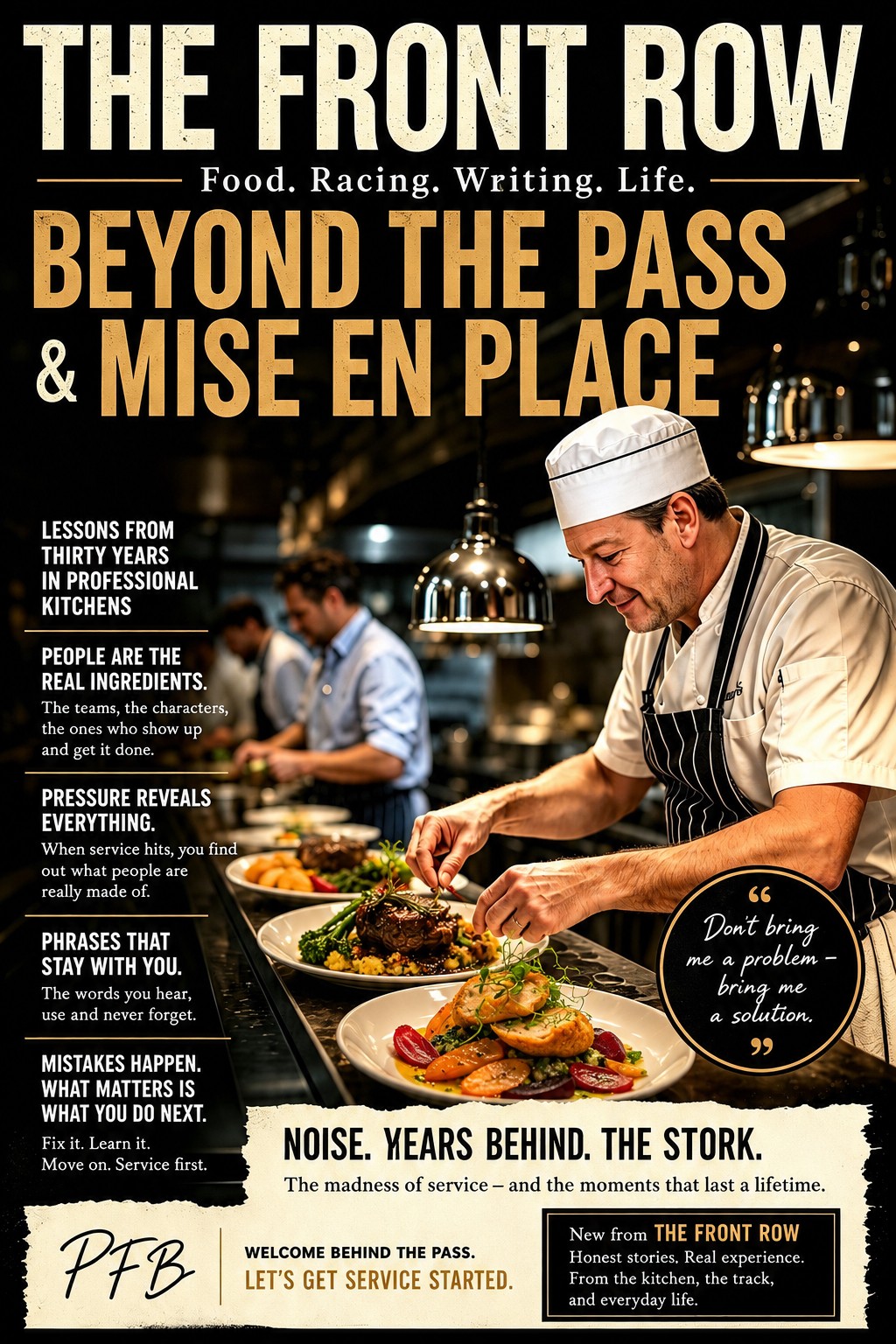
THE FRONT ROW
Food. Racing. Writing. Life.
BEYOND THE PASS & MISE EN PLACE
Reflections from Thirty-plus Years in the Kitchen
Welcome back to The Front Row. Pull up a chair.
Today I’m taking you behind the pass — and sharing what thirty-plus years in professional kitchens taught me about food, people, pressure, and getting the job done.
I’ve been lucky enough to work in some remarkable kitchens alongside some truly gifted cooks. Those years taught me everything I know — not just about food, but about people, pressure, and getting the job done.
Plenty has faded from thirty‑plus years in professional service. Recipes have blurred. Supplier names have slipped away. Even the names of some colleagues I’ve long since lost touch with. But one thing has never faded: the feeling of a busy evening in full swing.
The noise. The heat. Tickets piling up. Garlic hitting a hot pan. The shout from the kitchen — and the shout back. Then that sharp, breath‑catching moment when you glance at the clock, look along the ticket rail, and realise the rush has truly arrived. That adrenaline is addictive. And that is when you find out what people are truly made of. Because pressure? It isn’t for everyone. In my younger days, I could hold ten tickets in my head at once — a trick that always seemed to impress those working beside me.
I came to learn something else, too: customers expect excellence, yes — but they also have very little patience to wait for it.
The Kitchen Is a Great Teacher
A professional kitchen teaches lessons no classroom ever could. It teaches that preparation matters. Timing matters. And shouting louder doesn’t make you right. Most of all, it teaches this: when something goes wrong, standing around discussing whose fault it is doesn’t get food onto plates.
I had one simple rule for my team: “We’ll discuss it later. Service comes first.”
Something went wrong? You fixed it. Then you moved on.
Simple to say. Much harder to do. I’ve seen talented chefs unravel simply because they couldn’t let go of a mistake they’d just made. The very best chefs I worked with were different.
A sauce split? Fix it.
A delivery didn’t arrive? Find another way.
A colleague didn’t show? Reorganise.
Something sent back? Find out why — then get straight on with the next ticket.
That mindset stayed with me long after I left the restaurant business. Because life works exactly the same way.
People Are the Real Ingredients
Years in kitchens taught me something vital: food is only a small part of the story. The real substance comes from the people. The teams who turn up and graft. The suppliers who deliver when it matters. The customers who keep coming back.
I’ve met countless characters, and many of my stories grow from those observations. I’ve worked with brilliant chefs who couldn’t lead a team. I’ve been advised by multi‑millionaire customers who spoke more sense than anyone I knew. And I’ve watched modest, quiet cooks give everything they had, day after day. I’ve seen egos tear good service apart in seconds — and I’ve watched the most unassuming person in the kitchen become the one everyone leaned on when the pressure peaked. The person who seemed least important at the start of the shift could easily be the one who saved your backside by the end.
And if I haven’t mentioned the kitchen porter — I should have. They are the backbone of the whole operation. Without them keeping pots, pans, crockery and cutlery moving, the show simply stops.
A kitchen is a brutally honest place. No room for pretence. If you can do the job, you earn respect. If you can’t, people notice. And willingness to learn? That beats raw talent every single time. Give me someone eager to improve over someone who thinks they already know everything. Always.
A Few Kitchen Phrases That Stay With You
Certain phrases stick for life when you’ve spent years behind the pass:
• “Don’t bring me a problem — bring me a solution.”
• “I tell the jokes. End of.” — There is only one voice during service: mine.
• “Check on” — Said before calling an order out.
• “Service please!” — Signalling a dish is ready at the pass.
• “Mise en place” — Everything in its place, prepped and ready before service begins.
Anyone in catering knows it: you can plan until the cows come home. Then the doors open — and everything changes. Those chaotic, unplanned moments? They often become the stories you laugh about years later. At the time? Let’s just say it wasn’t always pretty.
Final Thoughts
You never stop learning. Even after all this time, I’m still impressed by a fresh idea from a young chef. A detail spotted by a commis. A customer sharing exactly what they thought.
Above all else: never be afraid of getting things wrong. Mistakes are simply part of the job. You learn. You move on. As a great chef told me on my very first day:
“It’s okay to make a mistake. It is not okay to make the same mistake twice.”
Sometimes you serve up something wonderful. Sometimes you serve up a disaster. But you learn. You dust yourself down. And you go again.
Leave a Comment
I hope you enjoyed this post. If you would like to, please leave a comment below.