🚦 THE FRONT ROW
WELCOME / ABOUT
Welcome to The Front Row.
If you’re looking for polished platitudes, curated lifestyles, or hollow advice — you’ve come to the wrong place.
No unnecessary garnish. No filters. No fine print.
Just honest observations, real experience, hard‑earned lessons, and the occasional tale best kept behind closed doors.
These are my stories — from the pass, the bar, the racecourse, and the road. Real food, real people, real racing — and the quiet truths that stay with you long after service ends, the crowd fades, and the horses have passed the post.
Pull up a seat. You’re right where you belong.
🏇 GAMBLING TALES
Six Months of Gambling Full‑Time for a Wage
Saturday, 1 August 2020.
The country stood silent under lockdown. Coronavirus had brought everyday life to a standstill — and, after four long months, racing finally returned.
Behind closed doors.
No crowds. No cheers. No familiar roar from the grandstands. Just the thud of hooves, the commentator’s call, and the strange quiet of empty courses beamed into living rooms.
It felt different.
And, for me, so did the game.
These days, if you want to survive and flourish in the corporate world, you have to be prepared to be ruthless.
I had grown increasingly disillusioned with my role as Executive Chef. After years in professional kitchens, I began questioning where I was heading. Hospitality has always mattered to me — great hospitality is about taking care of people. To do that properly, you must be involved in every part of the experience, not simply turn up at the end and take the credit.
But corporate life works differently. To survive there, you sometimes have to set aside sentiment. Watch what people do, not just what they say. One lesson I’ve learned, both in kitchens and elsewhere: money usually follows when you get the important things right.
So when racing returned, I decided to take betting seriously. Not as a hobby. Not as a casual flutter. For six months, I treated it as my job.
And it taught me more than I expected.
The Reality of the Grind
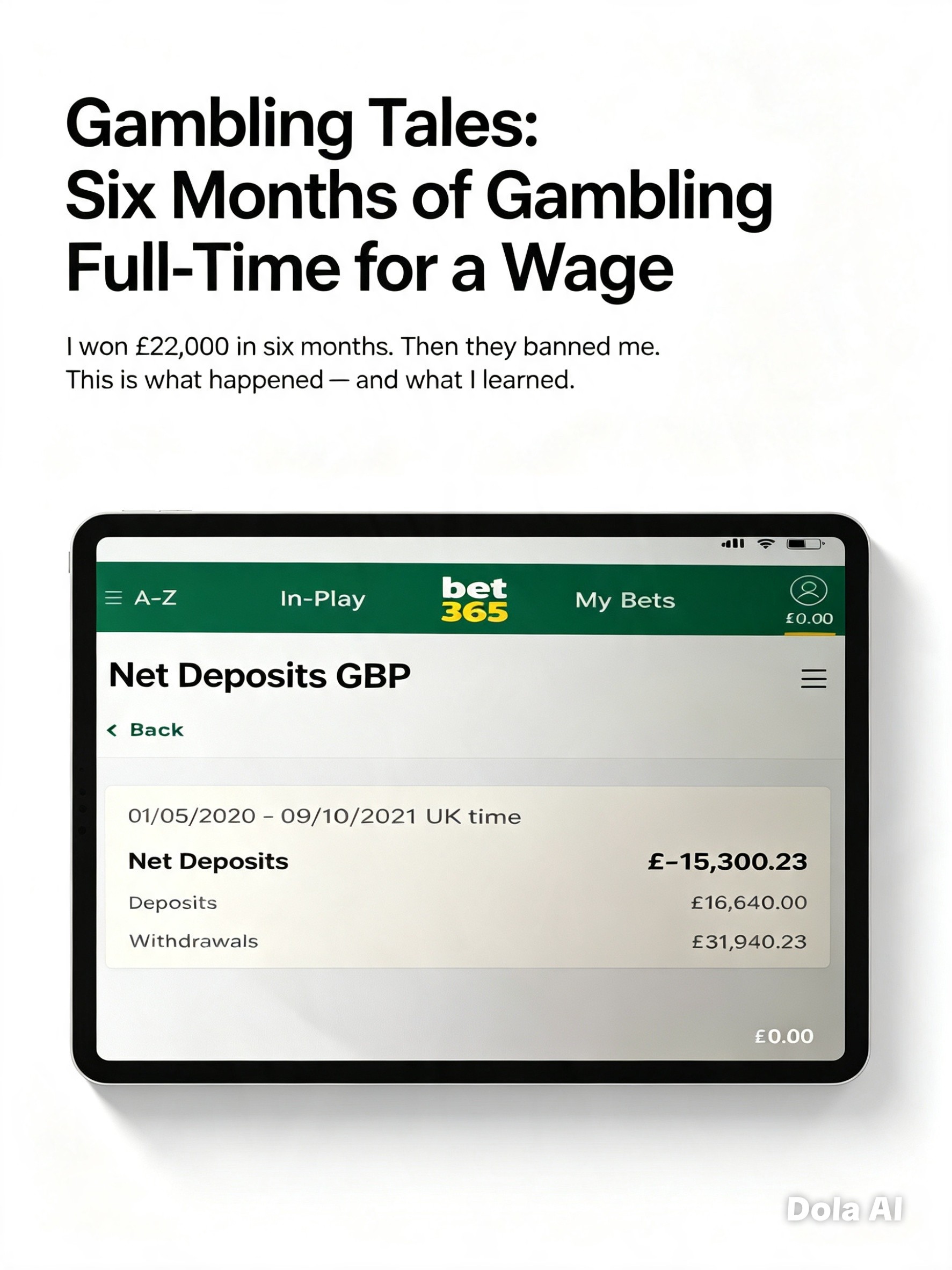
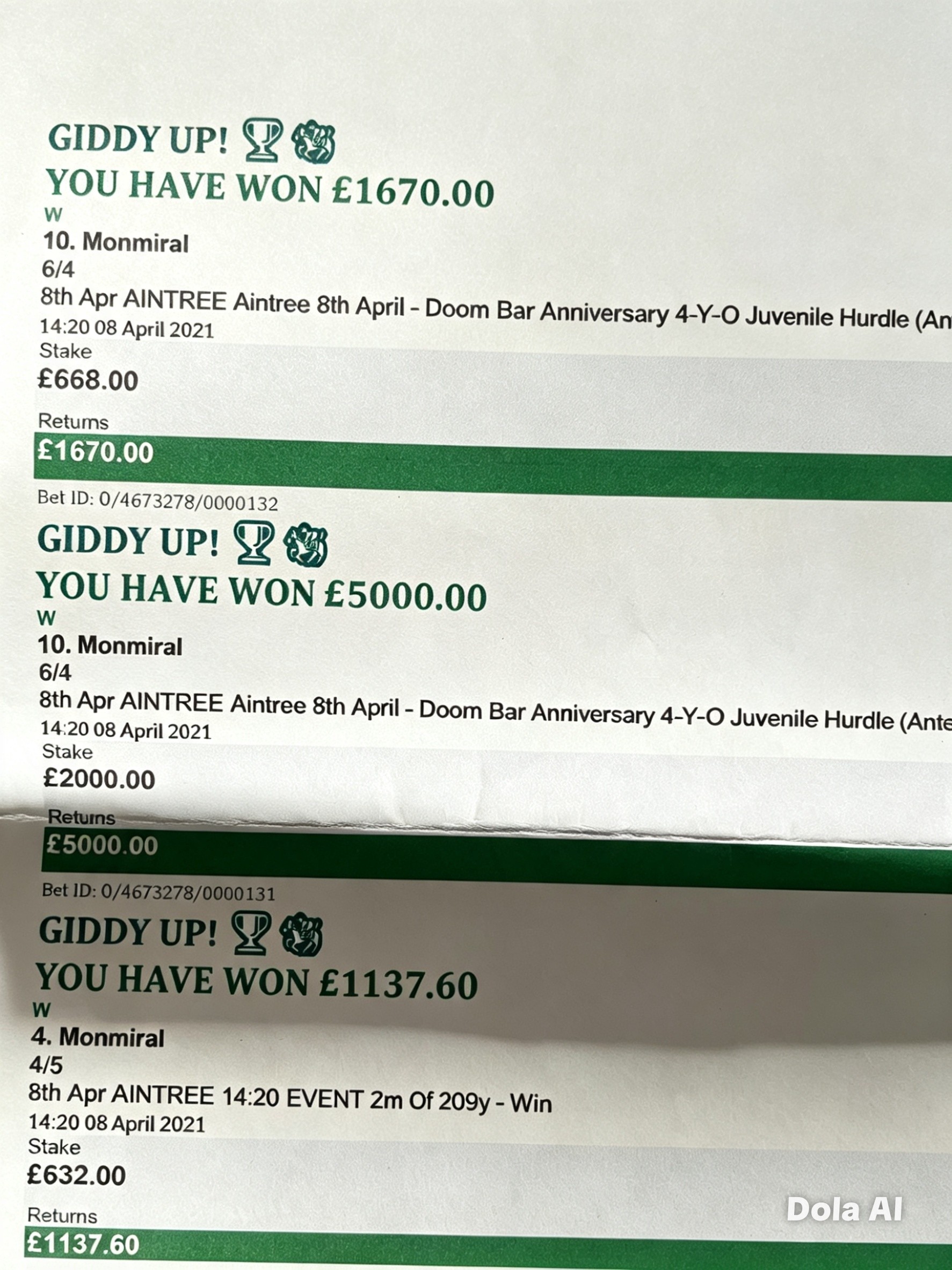
Over those six months, disciplined betting brought me just over £22,000 in profit. Finding winners was never the problem. Getting the money on was.
Stakes between £200 and £1,000 began to attract attention. Bookmakers started asking for proof of income — checking whether I could afford to lose. The irony was plain: I wasn’t losing. I was winning.
Over three months, I won roughly £14,000 from one major firm. Their response? Restrict me to a maximum £1 bet. Effectively closed down. The others followed.
It was the sharpest lesson of all: bookmakers accommodate losers. They restrict consistent winners. You can beat the odds — but you cannot always beat their willingness to accept your bets. Successful betting isn’t just about picking winners. It’s about understanding form, value, the market — and increasingly, the business you’re betting against.
💡 Advice for Aspiring Bettors: If you plan to bet seriously, anticipate account restrictions early. Spread stakes across multiple platforms, consider exchanges like Betfair — where winning isn’t penalised the same way — and never rely on a single bookmaker staying open to your business once you find an edge.
Betting in a Nutshell
Winning begins with doing everything reasonably to avoid losing. Construct your bets with care, selecting races deliberately. Have the courage and conviction to see your selections through. Treat every bet as one in a long sequence — never let a single result carry undue weight or emotional charge.
Accept that losing runs are part of the statistical pattern. They do not mean your judgement has failed. Remain open‑minded, keep learning, and always look to refine your approach.
Form Is Everything
You must develop a feel for form — and that doesn’t happen overnight. It comes from studying every race, every horse, and understanding how one performance fits into the bigger picture.
I look at the quality of the horses, the class of the race, the course, the going, and the time. I look at how the race was actually run. Was the pace strong? Did a horse finish better than the bare result suggests? Was it caught wide? Did it have to make ground at the hardest part of the race?
The finishing position tells you only part of the story. The race itself tells you more.
💡 Advice on Form Study: Don’t rely solely on finishing positions. Watch race replays — repeatedly. Look for the hard‑luck stories: horses trapped behind a wall of runners, forced wide on every turn, or those that set an unsustainable pace and tired late. These are the hidden gems the public misses.
What Separates Winners from Losers?
After decades of paddocks, papers, and records — it comes down to three pillars:
Knowledge. The hours spent studying form, trainers, jockeys, courses, ground, distances, race conditions, and trends. The work never truly stops.
Discipline. Knowing when to bet — and more importantly, knowing when not to. The courage to sit on your hands when nothing stands out. Patience is itself a profit centre.
Value. Understanding odds and probability. Knowing the difference between a horse likely to win — and a horse that represents a good bet at the available price. A favourite can win and still be a bad bet. A 10/1 shot can lose and still have been a great bet. You are not trying to predict who wins — you are trying to find where the price is wrong.
The Winning Mindset
Learn from the past — then let it go. Bet the race in front of you, not the one that got away. One result does not rewrite the next.
Accept losing as part of the pattern. Bad runs happen. They do not mean you’ve suddenly forgotten how to assess form. Trust your process.
Control is everything. Anyone stays calm when winning. The real test is how you carry yourself when things go against you.
Treat every bet as a fresh trade. One outcome should never alter your next decision. Never chase losses.
Let selections come to you. If nothing clearly stands out, do not force a bet. There will always be another race.
Keep honest records. Your own betting history is your most valuable resource. The numbers do not lie — they show you exactly what worked, and what did not.
Think like a bookmaker. Ask yourself: Would I offer these odds? If the answer is no, you may well have found value.
Respect the margins. The difference between winning and losing can be incredibly small. A little extra value here. A better price there. The discipline to walk away when the odds are wrong. Over hundreds of bets — those small things become everything.
What I Learned
Six months of betting full‑time taught me more than simply how to spot a winner. It taught me discipline. It taught me about money. It taught me about people. And it taught me something about myself.
There is a particular kind of confidence that comes from standing right on the edge of uncertainty — and still trusting your own judgement. That is where belief grows.
But there was another lesson waiting. The bigger the stakes became, the heavier the pressure. The bookmakers’ restrictions eventually made it impossible to continue at the level I had been operating. And slowly, I came to realise something important: peace of mind has a value no amount of profit can match.
💡 Advice on Bankroll & Balance: If you scale up your betting, set strict risk rules from day one — never risk more than 1–2% of your bankroll on a single bet. More importantly: recognise when the pursuit stops being enjoyable and starts costing you peace of mind. No profit is worth chronic stress.
How It Stands Now
Things change. The stakes became too high. The restrictions kicked in. And I learned that making money is not the same thing as enjoying what you do.
I still love racing. I still study the form. I still get that quiet satisfaction when I spot something the rest of the crowd has missed.
But these days? A few hundred pounds is my absolute maximum.
No chasing. No stress. No fighting bookmakers just to get a bet accepted. Just the study, the sport, and the quiet pleasure of getting one right.
Some days you win. Some days you learn. And every day — thankfully — there is another race.
Leave a Comment
I hope you enjoyed this post. If you would like to, please leave a comment below.